Sectra vs Medicai for Vendor-Neutral Archives
Many radiology teams face a vendor-neutral archive choice between Sectra and Medicai when their current storage cannot handle multi-site image exchange without extra servers. This decision now affects how quickly referring physicians receive prior studies and how much IT staff time goes into maintaining separate storage silos. The choice also determines whether future AI tools can run directly on the archive or require data copies.
By the end of this article you will see which platform stores DICOM studies without local hardware, how each handles encryption and data residency rules, and which one integrates into existing PACS viewers without additional middleware licenses. You will also know the exact pricing model differences and the scenarios where one option clearly outperforms the other.
Quick Verdict: Sectra vs Medicai for Vendor-Neutral Archives
Sectra delivers a mature enterprise VNA with deep hospital integrations while Medicai offers a cloud-native archive with 1M+ studies processed annually.
The first decisive difference appears in access methods. Medicai combines its archive with a zero-footprint DICOM viewer that requires no local installation. Sectra relies on traditional client-server architecture for image display.
The second distinction involves deployment models. Sectra scales through on-premise infrastructure that demands physical hardware management. Medicai handles growth through cloud resources without hardware procurement cycles.
The third distinction centers on pricing clarity. Medicai publishes transparent rates including its Starter plan at $249/month. Sectra pricing typically requires custom quotes and extended sales cycles.
Small to medium practices benefit from Medicai's predictable costs and browser-based access. Large health systems with existing on-premise commitments may find Sectra's infrastructure approach more aligned with their current setup.
At a glance: how Medicai compares to Sectra, Medicai for Vendor-Neutral Archives on the features that matter most.
| Feature | Medicai | Sectra | Medicai for Vendor-Neutral Archives |
|---|---|---|---|
| Vendor-Neutral Archives | ✓ | ✓ | — |
What Is Medicai?
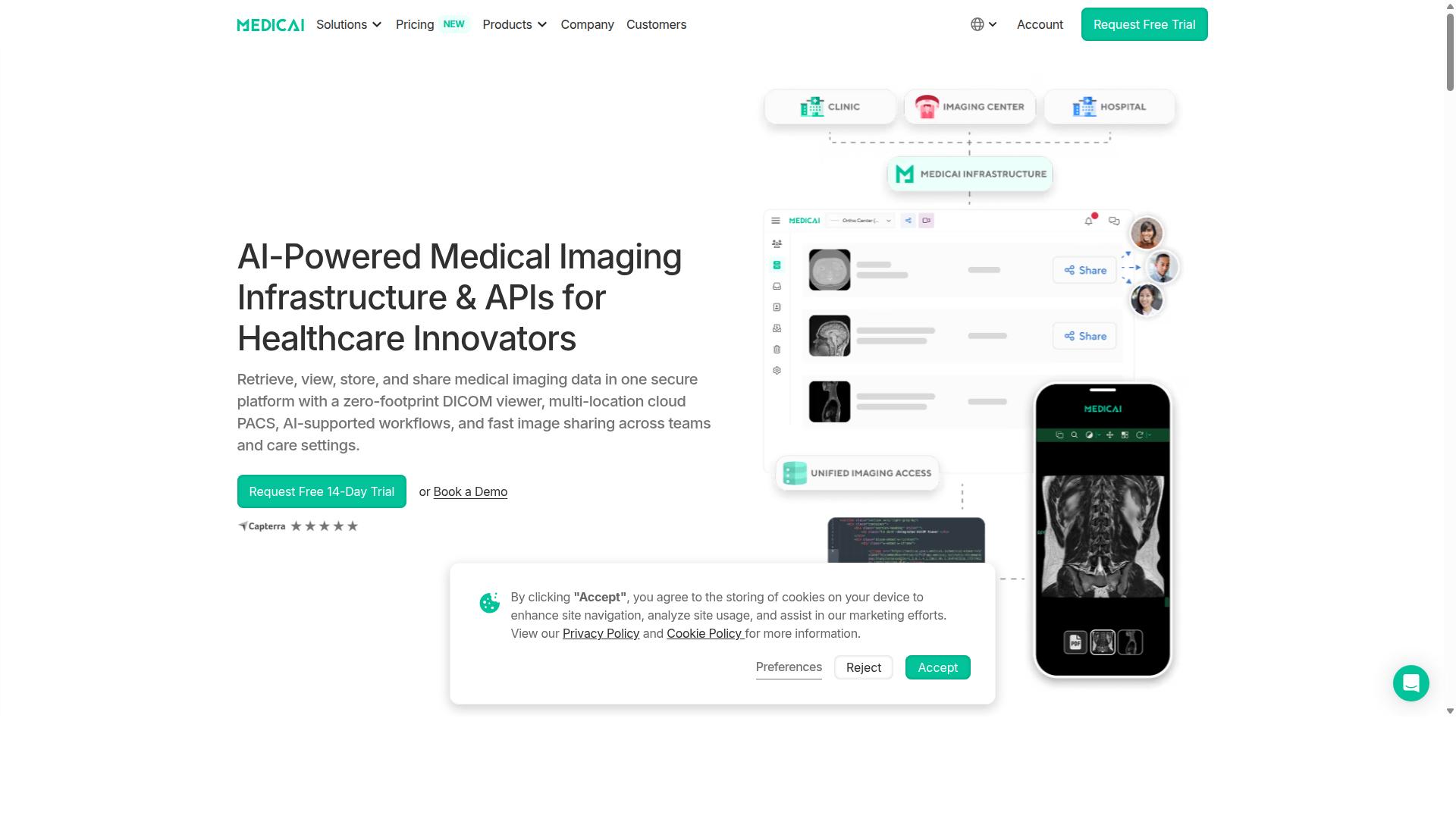
Medicai is a cloud-based medical imaging platform that lets providers retrieve, view, store, and share DICOM studies from a single browser window.
- The zero-footprint viewer requires no local installation, allowing instant access to imaging studies on any connected device.
- Built-in HIPAA and GDPR compliance supports secure handling of patient data across regulated healthcare environments.
- Global availability means care teams can access the same vendor-neutral archive from multiple sites without regional restrictions.
Over 50 million API transactions per year demonstrate the platform's ability to handle enterprise-scale workloads in real clinical settings.
What Is Sectra?
Sectra is a Swedish enterprise imaging vendor offering modular PACS and VNA solutions deployed on-premise or in private clouds for large health systems.
The platform supports HL7 and FHIR standards, enabling communication between imaging systems and electronic health records. This interoperability helps health systems maintain consistent data flows across departments.
Sectra targets high-volume radiology departments that require robust storage and retrieval capabilities. The architecture handles enterprise imaging workflows where multiple specialties access shared image archives.
Organizations evaluating vendor-neutral archive options often compare Sectra's enterprise approach to cloud-based alternatives. The choice depends on infrastructure requirements, existing IT investments, and long-term scalability needs.
Healthcare IT teams examine factors such as data migration complexity, integration requirements, and ongoing operational overhead when selecting a VNA. These considerations shape how well any archive solution fits into current and future imaging strategies.
What Is Medicai for Vendor-Neutral Archives?

Medicai's Vendor Neutral Archive consolidates studies from any modality into a single, queryable cloud repository with HL7 and FHIR connectors. This architecture breaks down departmental silos because all imaging data flows through the same central system.
The vendor-neutral archive forms the core component of this setup. It accepts DICOM images from different manufacturers and stores them in a standardized format that remains accessible regardless of source system.
1.7M+ studies in storage demonstrates the platform's capacity to handle substantial imaging volumes. Additional components include automatic Backup and Disaster Recovery services that protect data integrity across the entire archive.
Medical imaging workflows benefit when departments no longer maintain separate PACS systems. The Vendor Neutral Archive connects with existing infrastructure through the Medical Imaging Uploader and DICOM Gateway, creating unified access across radiology, cardiology, and other specialties.
Interoperability features such as HL7 and FHIR connectors enable data exchange with hospital information systems. This integration removes barriers between departments that traditionally operated independent archives with incompatible formats and access methods.
The cloud-based design supports both on-premise and hybrid deployment models. Organizations can migrate existing data volumes without disrupting current radiology workflows while maintaining compliance standards for patient data security.
Features Compared
The following three areas highlight the architectural and operational differences between the two VNAs.
IT leaders evaluating vendor-neutral archive solutions must balance performance, compliance, and interoperability requirements. Cloud scalability determines how quickly systems handle growing imaging volumes. Security controls protect sensitive patient data across jurisdictions.
Integration capabilities define how smoothly workflows connect with existing hospital systems. These distinctions directly affect deployment timelines, operational costs, and clinical efficiency across radiology departments.
Cloud Architecture and Scalability
Medicai runs on AWS and Azure with automatic scaling, whereas Sectra typically uses on-premise or private-cloud clusters sized for peak hospital loads.
Automatic scaling allows Medicai to adjust resources based on real-time demand without manual intervention. This approach eliminates the need for over-provisioning hardware during low-volume periods.
Table compares key performance metrics between the platforms.
| Metric | Medicai | Sectra |
|---|---|---|
| Throughput capacity | 1M+ studies processed yearly | Cluster sized for peak loads |
| Storage flexibility | 500 GB starter to multi-TB | Fixed capacity planning |
| Image load time | Sub-second retrieval | Dependent on local infrastructure |
Cloud-native architecture reduces infrastructure management overhead for IT teams. Organizations avoid hardware refresh cycles and capacity forecasting challenges.
Security, Compliance, and Data Residency
Both platforms meet HIPAA and GDPR, but Medicai offers region-level data residency while Sectra keeps data inside the hospital network.
Medicai implements encryption at rest and in transit across all stored imaging data. Role-based access control restricts viewing permissions according to clinical roles and departmental needs.
Audit trails track every interaction with patient records at granular detail levels. FDA and CEE clearance validates Medicai viewers for diagnostic use across multiple jurisdictions.
Data residency options allow healthcare organizations to maintain compliance with regional regulations. Hospital network storage provides physical control while requiring additional security layer management.
Integration and Workflow Efficiency
Medicai exposes 50M+ yearly API transactions via HL7 and FHIR, while Sectra relies on its proprietary integration engine for EHR connectivity.
DICOMweb and WADO protocols enable seamless image retrieval across different systems. These standards support interoperability between radiology departments and external care providers.
A typical radiology workflow begins with order placement through the EHR system. DICOM studies route automatically to the vendor-neutral archive for storage and retrieval.
Structured reporting features allow radiologists to complete documentation within the platform. Patient case management tools organize studies by clinical episode for multidisciplinary review.
HL7 and FHIR connectivity enables real-time data exchange with hospital information systems. This integration reduces manual data entry and improves report turnaround times.
Pricing Compared
Medicai lists transparent monthly fees; Sectra pricing is project-based and rarely disclosed publicly. Healthcare organizations evaluating vendor-neutral archive solutions need clear cost structures to plan budgets effectively. Transparent pricing removes uncertainty from procurement decisions.
Medicai offers two primary subscription tiers with defined storage limits and connectivity options. The Starter plan costs $249 per month and includes 500 GB of cloud storage plus unlimited user accounts. Organizations requiring more capacity can upgrade to the Standard plan at $749 per month, which provides 2 TB of storage and support for one connected location.
Sectra typically requires formal requests for proposals before sharing cost details. This approach makes direct price comparisons difficult during initial vendor evaluations. Project-based quotes depend on scope, infrastructure requirements, and deployment complexity.
Yearly billing options provide savings for Medicai customers. The Starter plan reduces to $209 monthly when paid annually, while the Standard plan costs $639 per month under the same arrangement. Enterprise deployments receive custom quotes based on specific storage and connectivity needs.
Additional costs for Medicai include a one-time $1,000 DICOM Gateway setup fee per location. A 14-day trial period allows organizations to test Starter plan capabilities before committing to a subscription. Per-study pricing remains available for enterprise customers with variable imaging volumes.
Who Should Choose Medicai
Hospitals and imaging centers that need rapid deployment and predictable costs should evaluate Medicai first.
Multi-site healthcare groups benefit from Medicai's unlimited user accounts. This structure supports radiologists, referring physicians, and administrative staff across locations without additional licensing fees.
Global access becomes essential when care teams span multiple time zones. Teleradiology firms find this capability particularly useful for maintaining consistent workflows regardless of staff location.
Specialty clinics in orthopedics, neurology, oncology, and cardiology often require focused imaging access. Medicai serves these providers through targeted medical imaging tools that work together with existing systems.
Virtual care providers and telemedicine platforms need reliable image sharing capabilities. Medicai accommodates these organizations through its patient portal and clinical collaboration features.
Personal injury lawyers and tumor boards also rely on secure image access for case preparation. Medicai supports these workflows through controlled access permissions that maintain compliance standards.
Clinical trials and medical education organizations require scalable storage solutions. Medicai addresses these needs through flexible deployment options that adapt to varying data volumes and user requirements.
Who Should Choose Sectra
Large academic centers and IDNs with existing on-premise infrastructure often stay with Sectra for deep PACS integration.
These organizations typically require custom hardware configurations that align with their current data centers. They prefer systems that fit into established procurement frameworks and lengthy approval processes common in academic medical environments.
Complex HL7 interface requirements often drive this decision. Institutions with multiple legacy systems need interfaces that handle intricate data mapping between different electronic health record platforms and imaging systems.
Research suggests that organizations managing extensive on-premise deployments value the control this approach provides over their imaging data. They may prioritize data governance policies that keep sensitive patient information within their physical facilities.
Long procurement cycles favor vendors with established relationships in academic healthcare. These facilities often have relationships spanning decades with their current imaging informatics providers.
Enterprise imaging environments with specialized workflows may find that Sectra accommodates their particular clinical requirements. Departments handling research protocols or complex multi-site imaging studies sometimes need custom configurations that align with academic research needs.
Organizations evaluating vendor-neutral archive solutions should consider their infrastructure preferences carefully. Those committed to maintaining physical servers and network infrastructure may find Sectra aligns with their operational model.
Hybrid deployment options exist in the market, though some institutions prefer complete on-premise control. The decision often depends on existing investments in data center infrastructure and IT staffing models.
Who Should Choose Medicai for Vendor-Neutral Archives
Facilities consolidating legacy archives or launching new outpatient imaging lines benefit from Medicai's quick cloud VNA rollout. The platform supports smooth transitions without extended downtime or complex hardware setups. Many organizations find this approach simpler than traditional on-premise replacements.
Current users manage 1.7M studies already hosted with reliable performance across multiple clinical environments. The system processes over 1M studies annually while maintaining compliance with HIPAA and GDPR requirements. This track record demonstrates stability for organizations handling substantial imaging volumes.
300k DICOM visualizations completed last year show practical adoption among healthcare teams. Active users include 10,000 doctors across 70 clinics and hospitals who access studies through standard web browsers. Integration occurs through established protocols like HL7 and FHIR for existing PACS connections.
Organizations comparing Sectra and Medicai for vendor-neutral archive needs often cite simpler cloud deployment as a deciding factor. The Azure-based infrastructure handles scalability without additional local servers. Data governance features include encryption, access controls, and audit trails that meet enterprise standards.
Teams evaluating medical imaging interoperability options find the API layer supports 50M transactions yearly. This capacity enables connections with various hospital systems without custom development work.
Final Verdict
Choose Medicai when speed-to-value and transparent cost matter. Choose Sectra when deep on-premise control outweighs agility.
Medicai delivers 1M+ studies/year and handles 50M+ API calls each year. These numbers show the platform can manage high-volume imaging workflows without interruption.
The viewer is FDA and CEE cleared. This clearance supports organizations that need regulatory compliance for their vendor-neutral archive deployment.
Many radiology departments value the combination of proven throughput and regulatory approval. These two factors reduce both technical and compliance risk when replacing or upgrading a VNA.
Healthcare teams that need quick integration often select SaaS solutions like Medicai. On-premise systems like Sectra require longer setup cycles and more internal infrastructure support.
Medicai USA
7901 4th St N, STE 300
St. Petersburg, FL, 33702
Phone: +1 (832) 220 1035
Medicai Romania
53-55 N Filipescu, 5th Floor
Sector 2, Bucharest, 020961
Phone: +40 316 305 875
Email: [email protected]