Top 7 Alternatives of Sectra for AI-Assisted Radiology Workflow Automation
Radiology teams often outgrow their current PACS when image volumes rise but radiologist headcount stays flat. Many platforms force extra clicks for AI results or require separate logins for storage and exchange. These friction points push IT directors to review new workflow tools.
By the end of this article you will know the seven concrete capabilities that separate workable options from the rest, how Medicai ranks on integration and pricing, and which single platform earns the top spot for most departments. You will also have a short checklist to match your DICOM volume, viewer needs, and vendor contracts against the remaining six vendors.
What to Look For in AI-Assisted Radiology Workflow Automation
Evaluate workflow automation tools by their ability to reduce manual steps, enable instant image access, and embed AI algorithms directly into the radiologist's routine. These factors determine how effectively a platform supports radiology workflow automation and improves diagnostic efficiency.
One key metric is the number of mouse-clicks saved per study. Fewer clicks mean radiologists spend less time on navigation and more time reviewing images. Systems that consolidate multiple actions into single commands can streamline daily tasks significantly.
Another important measure is the average time from image acquisition to AI result display. Delays in this process can slow down reporting and affect patient care decisions. Faster turnaround times help radiologists maintain momentum during busy shifts.
DICOM viewer latency under 2 seconds on 1 Gbps network ensures smooth image loading and interpretation. High latency disrupts concentration and may lead to missed details. Reliable performance supports consistent reading sessions across different network conditions.
Automated routing rules based on anatomy or urgency allow images to reach the correct specialist without manual intervention. These rules can prioritize critical cases and reduce administrative overhead. Flexible configuration options help departments adapt to changing priorities.
Built-in audit logging for HIPAA/GDPR compliance provides documentation of every action taken within the system. This feature supports regulatory requirements and internal quality control. Comprehensive logs simplify audits and help maintain trust with patients and stakeholders.
1. Medicai - Best Overall
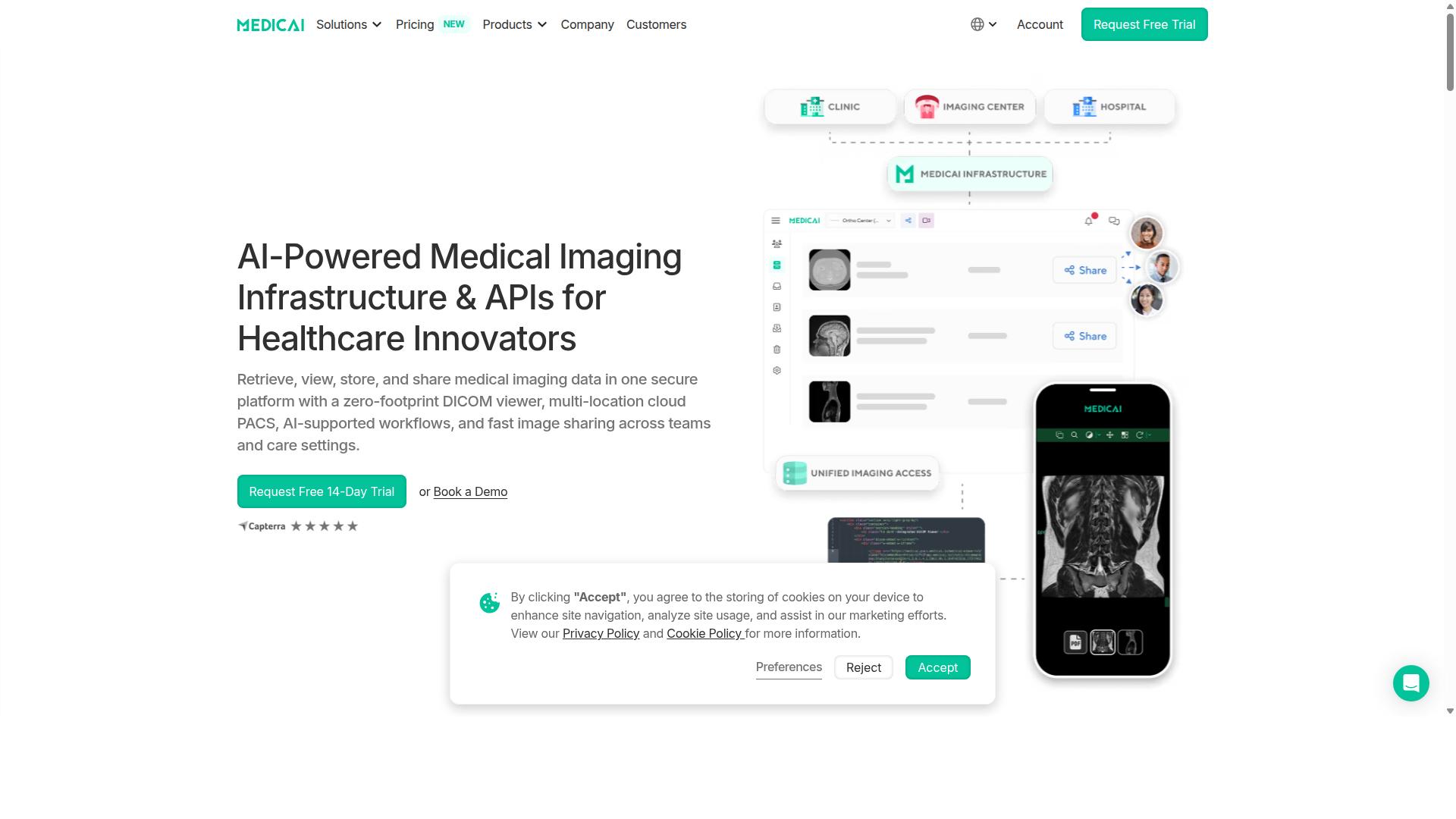
Medicai earns the top ranking because its single cloud platform consolidates image upload, storage, AI analysis, and secure sharing without on-premise hardware.
The solution delivers Imaging Infrastructure as a Service that modernizes radiology workflow automation across entire care networks. Hospitals replace fragmented legacy systems with one unified environment that handles every step of the imaging lifecycle.
This approach reduces the complexity typically associated with traditional PACS alternatives while maintaining full compliance standards expected in diagnostic imaging systems.
AI-Enabled Cloud PACS & Workflow Automation
The platform's zero-footprint DICOM viewer streams studies in-browser, while AI plugins from Rayscape and MD.ai surface findings directly in the viewer pane.
Medical imaging AI processes studies through automated workflows that support radiology reporting and clinical decision support. The system manages case preparation without requiring manual intervention at each step.
Automatic pre-fetching via the DICOM Gateway brings prior studies into active worklists. Single-click case sharing lets radiologists distribute images to referring physicians instantly. HIPAA/GDPR audit trails track every access event for compliance documentation.
Integration Capabilities and Pricing
Native connectors to Microsoft Azure, Amazon AWS, and partner viewers (OHIF, MedDream) allow hospitals to embed Medicai into existing RIS/PACS ecosystems.
Starter tier costs $249/month for 500 GB storage with unlimited user accounts and no connected locations. Standard tier costs $749/month for 2 TB storage with unlimited user accounts and one connected location.
Enterprise customers access custom pricing for multiple connected locations and external sites. The platform supports external API calls and includes DICOM Gateway setup at $1,000 one-time per location. A 14-day trial of Starter plan features is available without requiring a credit card.
2. Intelerad
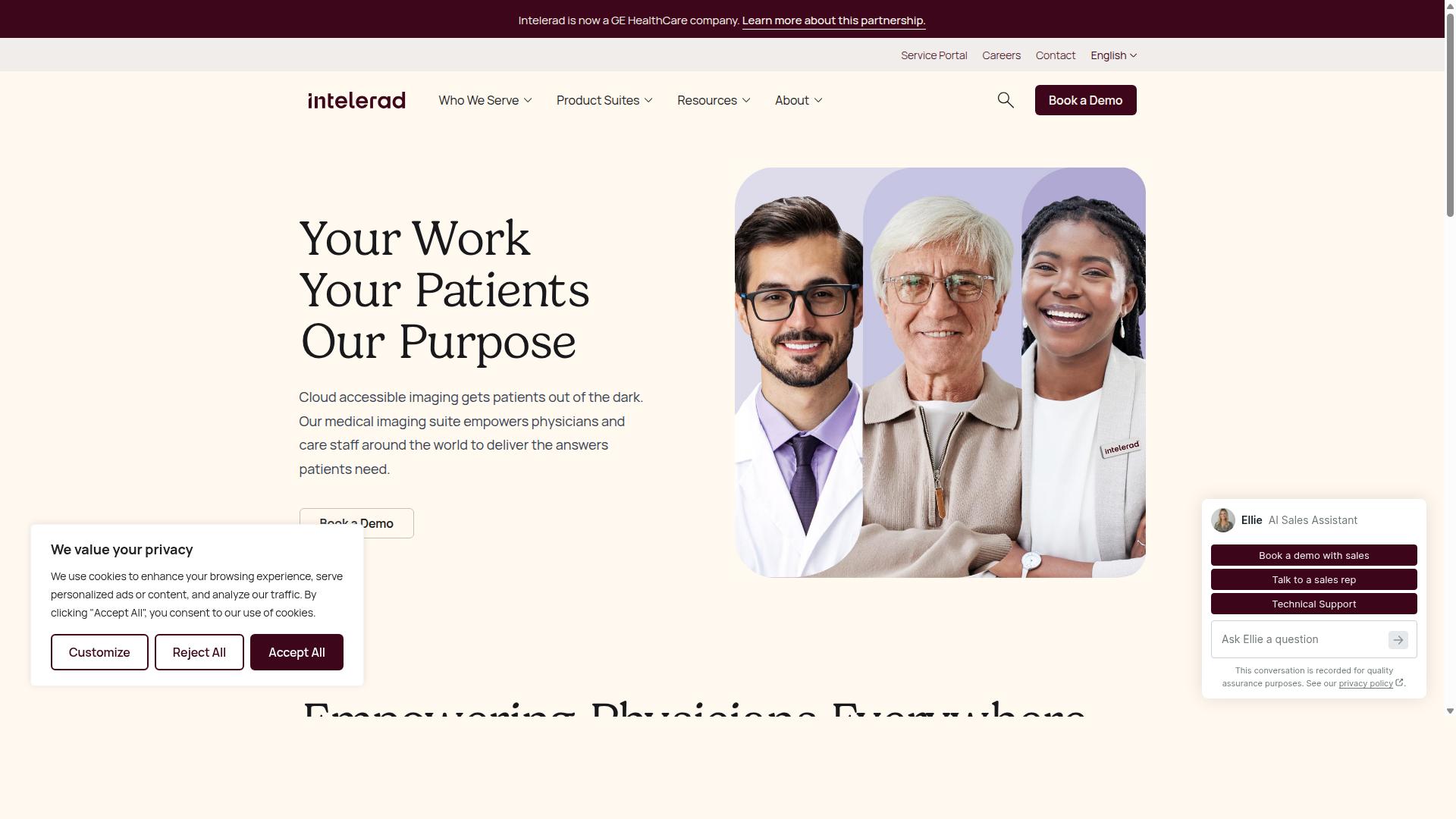
Intelerad offers an on-premise and hybrid cloud suite known for high-volume teleradiology centers. The platform centers around enterprise image exchange that lets organizations move studies securely across networks.
Deployment options include local servers or cloud configurations that support both large hospitals and distributed imaging groups. High-volume centers often choose this flexibility when they need consistent uptime across multiple sites.
Workflow speed depends on network connections and local hardware, so institutions evaluate their own infrastructure before committing. Research suggests that hybrid approaches can reduce latency for remote reads.
Cost range typically follows enterprise licensing based on study volume and number of connected facilities. Organizations usually request quotes that reflect their specific imaging mix and support needs.
The system handles DICOM workloads and connects with vendor-neutral archives. Hospitals and health systems use it to consolidate radiology, cardiology, pathology, and point-of-care records in one environment.
3. ProtonPACS
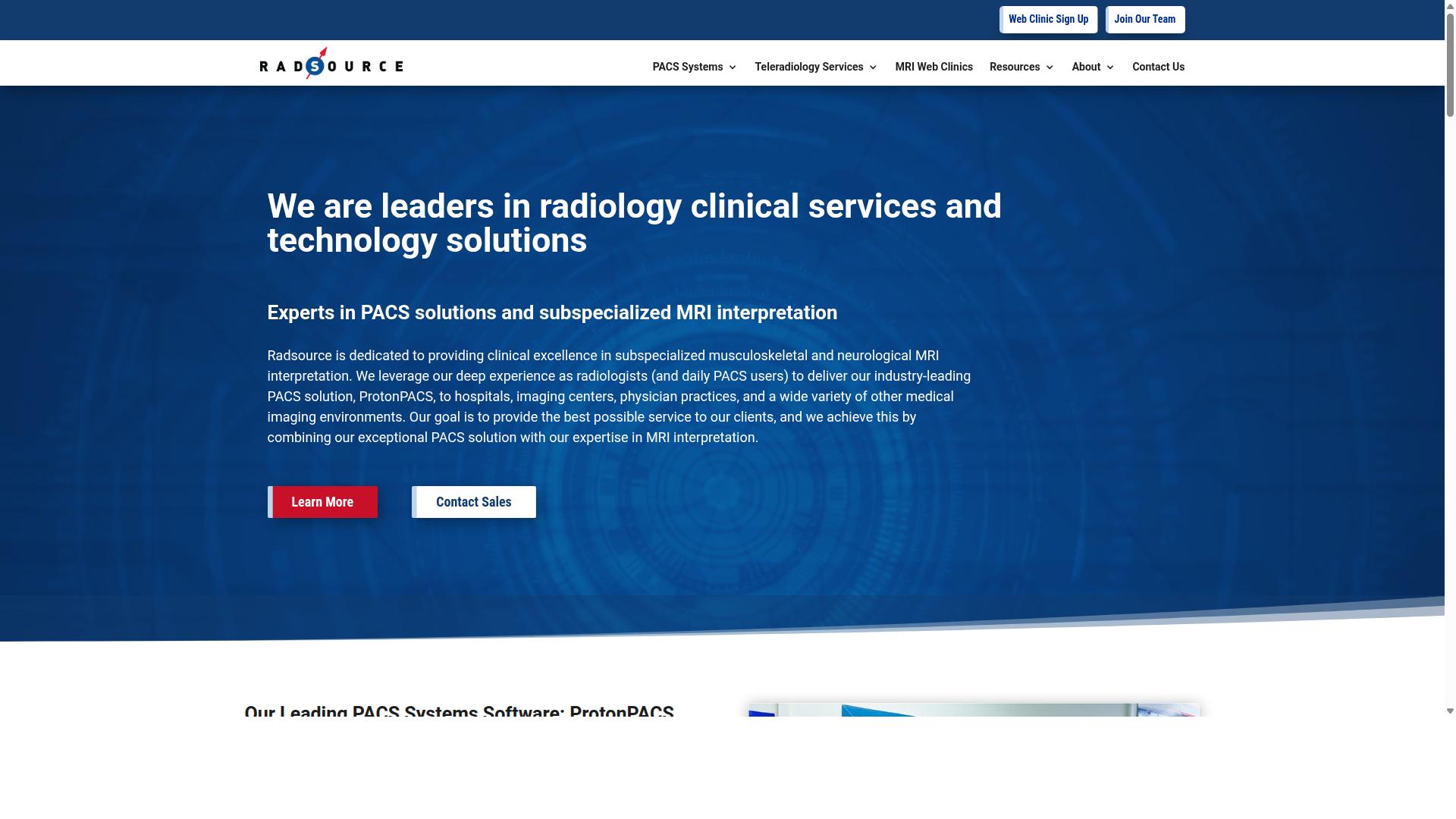
ProtonPACS markets a fully managed cloud PACS aimed at small-to-mid-size imaging centers. This platform centralizes storage and management of medical images from MRI, CT, x-ray, ultrasound, and other modalities. It helps facilities seeking streamlined workflows without managing infrastructure.
The solution offers advanced workstations equipped with AI tools, 3D reconstruction, and automated measurements. Worklist automation and real-time updates support radiology workflow automation across multiple locations. Multi-device accessibility keeps radiologists connected whether they work on-site or remotely.
Security features include HIPAA-compliant protocols that protect patient data during storage and transmission. Integration with RIS and EMR platforms allows healthcare IT solutions to share information without manual data entry. These connections reduce errors and speed up report turnaround times.
Orthopaedic practices, hospitals, and imaging centers often select ProtonPACS when they need reliable support and consistent uptime SLAs. Storage scalability accommodates growing image volumes without hardware investments. Typical pricing ranges vary based on study volume and user count.
Users gain access to DICOM viewers that display studies with consistent quality across devices. The system positions itself as an alternative to on-premises solutions that require substantial IT resources. Facilities can focus on diagnostic accuracy while the vendor handles maintenance and updates.
4. Sirona Medical
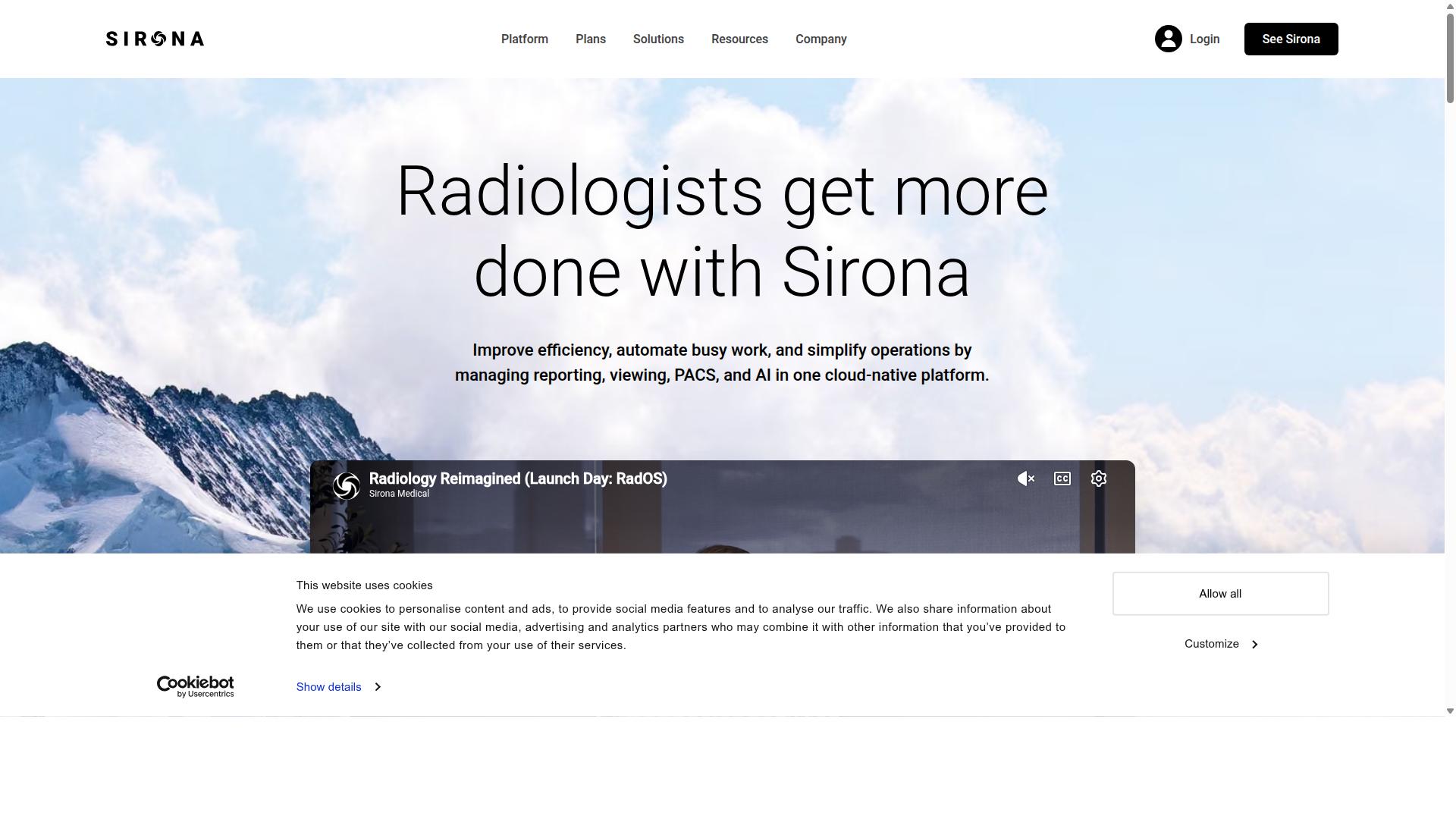
Sirona Medical combines imaging viewing and reporting into a unified cloud workspace. The platform operates as a zero-footprint solution that eliminates the need for local installation. This approach supports radiology practices seeking streamlined access across different locations.
Collaboration tools within the platform allow multiple users to access studies simultaneously. Team members can review images and add annotations in real time from various devices. The shared workspace reduces delays that often occur when files move between separate systems.
AI add-ons work together with the core workspace to assist with image analysis. These tools help radiologists identify patterns and flag areas that require closer examination. The combination supports diagnostic imaging systems that need both human expertise and algorithmic support.
Healthcare organizations use this setup for routine reporting as well as teleradiology platforms that require remote access. The cloud-native design aligns with enterprise imaging strategies that prioritize accessibility over on-site infrastructure.
The platform suits groups transitioning from traditional PACS alternatives to more flexible arrangements. Radiology workflow automation becomes more practical when viewing, reporting, and collaboration exist within a single environment rather than separate applications.
5. Fujifilm
Fujifilm Synapse is a long-standing enterprise imaging platform used in large hospital networks. The system supports radiology workflow automation through its integrated suite of tools designed for high-volume clinical environments.
Hospitals must choose between on-premise and cloud deployment when implementing these solutions. On-premise setups offer direct control over data storage and network security, while cloud options reduce infrastructure management and support faster scaling.
Each deployment model carries different trade-offs. On-premise installations typically require dedicated IT resources and longer implementation timelines. Cloud deployments shift maintenance responsibilities to the vendor and enable quicker updates across connected sites.
Synapse delivers broad modality support across radiology, cardiology, and pathology departments. The platform handles both DICOM and non-DICOM images within a single patient record, reducing the need for separate systems.
Its AI Orchestrator component connects third-party image analysis algorithms to existing workflows. This approach allows facilities to add specialized diagnostic tools without replacing their core PACS or RIS infrastructure.
Server-side rendering features enable browser-based access to studies without local software installation. The zero-download viewer supports multiple operating systems and reduces workstation configuration requirements across clinical departments.
6. RamSoft
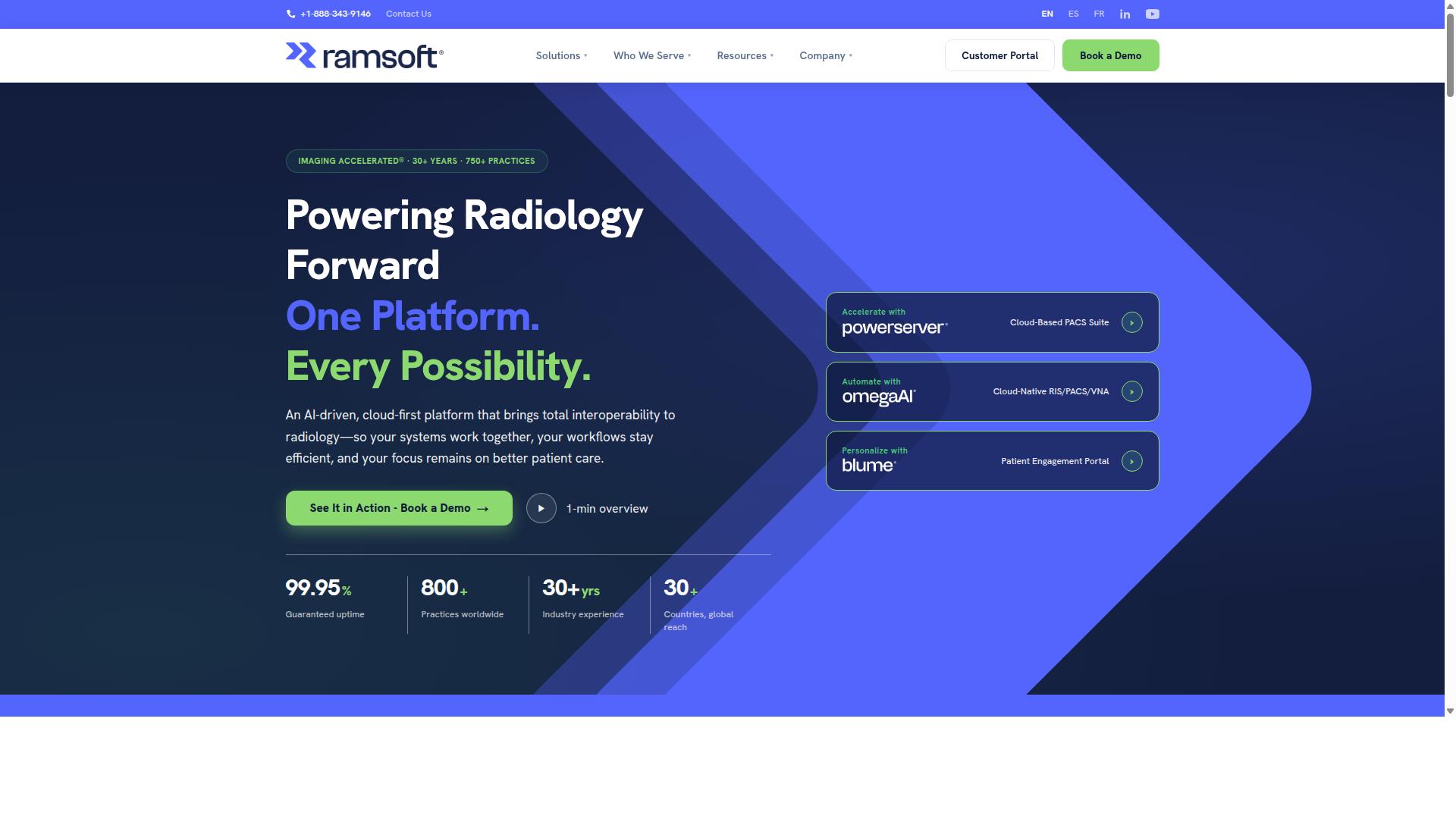
RamSoft supplies cloud-based RIS/PACS packages targeted at outpatient imaging providers. Their PowerServer and OmegaAI platforms serve imaging centers, hospitals, and teleradiology groups seeking integrated workflow tools. These solutions handle scheduling, image routing, and reporting tasks through built-in automation features.
The company offers several AI modules that address common radiology workflow bottlenecks. AI Scheduling manages appointment booking while AI Orchestration coordinates study distribution across reading pools. Additional tools include AI Reporting for structured documentation and AI Optix for image optimization tasks.
Critical findings alerts and automated DICOM routing help reduce manual intervention in high-volume environments. The Blume patient portal supports engagement features, while Stana provides mammography tracking capabilities. These components work together to streamline operations for busy outpatient facilities.
Compliance with HIPAA, SOC 2 Type II, and ISO 13485 standards addresses security requirements common in medical imaging. The platform positions itself as scalable for organizations handling large study volumes. Many facilities use these tools to support consistent turnaround times and reduce administrative overhead associated with manual workflow management.
7. AWS HealthImaging
AWS HealthImaging is an infrastructure service that stores and retrieves DICOM studies at scale. Healthcare providers use this managed storage layer to handle growing imaging volumes without managing physical servers.
Storage classes allow organizations to balance access frequency with cost. Frequently accessed studies stay in high-performance tiers while older archives move to lower-cost options. This tiered approach supports both daily clinical needs and long-term retention requirements.
Pay-as-you-go pricing charges based on actual storage consumed and API requests made. Teams avoid upfront commitments and adjust capacity as imaging workloads change across different departments.
Native AI/ML pipeline hooks connect stored images directly to machine learning workflows. Developers can trigger processing jobs, run inference models, and return results without moving large datasets between separate services.
These integration points help radiology teams explore automated analysis while keeping data secure within the same cloud environment. Organizations evaluate how this setup compares with other medical imaging software when seeking PACS alternatives for radiology workflow automation.
How to Choose the Right Option
Map each platform against your case volume, existing IT footprint, and specialty workflow needs.
Start by listing your monthly imaging volume. Then check whether each vendor supports that scale without throttling.
Next, review your current network setup to see which deployment model fits without major infrastructure changes.
| Checklist Item | Key Questions | Target Users |
|---|---|---|
| Storage limits | How much data can you upload and retain before costs rise? | Hospitals, imaging centers, specialty clinics |
| AI availability | Are built-in tools or add-on modules offered for your specialty? | Radiology departments, oncology centers, cardiology practices |
| Deployment model | Do you need cloud, on-premise, or hybrid access? | Multi-site health systems, teleradiology services, virtual care providers |
| Multi-location support | Can separate sites share a single worklist and archive? | Enterprise imaging networks, hospital groups, clinical trials |
Finally, confirm that the vendor can work together with your existing RIS and EMR systems.
Providers such as orthopedics and neurology clinics often need tight PACS integration and specialty reporting templates.
Verify that the chosen platform meets these requirements before signing a contract.
Final Verdict
The right platform must balance AI depth, deployment ease, and predictable costs. Medicai demonstrates this balance through concrete scale and compliance credentials that many providers seek when evaluating alternatives to Sectra.
Each year the platform processes over 1M studies and keeps 1.7M studies in storage. These numbers reflect stable performance across 70 clinics and hospitals that already rely on the service for daily radiology workflow automation.
Users generate 300k+ DICOM visualizations annually, supported by FDA and CEE cleared viewers that meet global regulatory standards. HIPAA and GDPR compliance, along with adherence to OWASP security guidelines, further positions the solution for organizations that need both speed and audit-ready infrastructure.
More than 10,000 active doctors access the system, and the platform records 50M yearly API transactions. The Microsoft Azure partnership underpins this activity with enterprise-grade hosting and uptime guarantees.
Case studies show Medicai enabling global multidisciplinary tumor boards and supporting Ukrainian refugee patients who require coordinated cancer care across borders. These examples illustrate how AI-assisted diagnostics and teleradiology platforms work together at scale.
Organizations comparing PACS alternatives can use these verified metrics to evaluate whether a vendor meets both clinical volume and regulatory requirements without hidden variables.